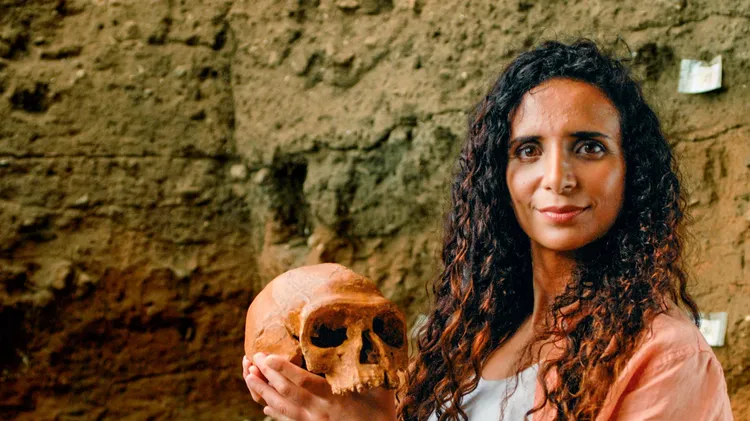
Imagine stumbling upon a dusty old mine in the Moroccan countryside, expecting nothing more than rocks and dirt, only to uncover clues that flip everything we thought we knew about where we come from. That’s pretty much what happened back in the 1960s at Jebel Irhoud, a site that’s since become a game-changer in paleoanthropology. I remember reading about it years ago and feeling that rush—like suddenly your family tree just got extended by a few branches you never knew existed. These discoveries aren’t just bones; they’re a reminder that our story as humans is messier, older, and more widespread than the tidy narratives in textbooks. Let’s dive into how Morocco’s fossils are reshaping human evolution, from the ancient Jebel Irhoud finds to the latest revelations shaking up the field.
The Jebel Irhoud Discovery: Pushing Back the Clock on Humanity
Nestled about 100 kilometers west of Marrakesh, Jebel Irhoud was once a cave system turned mining site. In 1961, miners accidentally unearthed a skull that puzzled experts for decades. Fast-forward to 2004, when an international team led by Jean-Jacques Hublin revisited the area, unearthing more fossils and tools that would redefine our timeline. These remains, dated to around 315,000 years ago, represent the oldest known Homo sapiens fossils, extending our species’ origins by over 100,000 years.
What makes this site special is its mix of primitive and modern traits in the bones. The faces look remarkably like ours—flat and retracted—while the braincases are elongated, hinting at an early stage in our evolution. It’s like finding a vintage car with modern upgrades; it drives the point home that humanity didn’t pop up fully formed.
Unearthing the Evidence: What Was Found at Jebel Irhoud?
Excavations revealed skulls, jawbones, teeth, and even a child’s mandible from at least five individuals. Alongside them were stone tools from the Middle Stone Age, including sharpened flakes for hunting and scraping. Animal bones showed signs of fire use, suggesting these early humans cooked gazelle and zebra meat over hearths. Picture a group gathered around a flame, sharing stories under the stars—it’s a scene that humanizes these distant ancestors.
The tools weren’t crude; they showed sophistication, like Levallois points for efficient flaking. This challenges the idea that advanced behaviors emerged much later. Instead, it paints a picture of innovative people adapting across Africa.
Dating the Fossils: How Do We Know They’re That Old?
Scientists used thermoluminescence dating on heated flint tools, which measures trapped electrons released by heat, pinning the age at 315,000 years with a margin of error. Uranium-series and electron spin resonance on a tooth corroborated this, giving a date of about 286,000 years. These methods cross-check like detectives piecing together alibis, ensuring the timeline holds up.
This pushes back against earlier estimates that pegged the site at 160,000 years old. It’s a testament to how technology refines our understanding—much like how DNA testing overturns old convictions.
The New Casablanca Find: Even Deeper Roots in Morocco
Just when we thought Jebel Irhoud was the star, 2026 brought news of fossils from Grotte à Hominidés in Casablanca, dated to 773,000 years ago. These jawbones, teeth, and vertebrae belong to hominins basal to our lineage—close ancestors shared with Neanderthals and Denisovans. Found in a carnivore den, they fill a gap in Africa’s fossil record, reinforcing Morocco as a hotbed for early human evolution.
Unlike Jebel Irhoud’s more modern features, these show primitive traits similar to European Homo antecessor. It’s like discovering a missing link in your ancestry.com results, pointing to Africa as the cradle rather than Europe.
Implications for Human Origins: From East Africa to Pan-African
For years, the “Out of East Africa” model dominated, with sites like Omo Kibish and Herto in Ethiopia as ground zero. But Morocco’s finds suggest a pan-African origin—Homo sapiens evolving across the continent in interconnected populations. Genetic evidence supports this, showing divergence from Neanderthals around 550,000-765,000 years ago, aligning with the Casablanca fossils.
This mosaic evolution means traits like our flat faces appeared piecemeal, not all at once. It’s humbling; our species wasn’t a sudden spark but a slow burn across vast landscapes.
Comparing Key Fossil Sites: Jebel Irhoud vs. Omo Kibish and Herto
To grasp how Morocco rewrites the story, let’s compare these pivotal discoveries. Each site offers unique insights into our journey.
| Site | Location | Age (Years Ago) | Key Fossils | Notable Features | Implications |
|---|---|---|---|---|---|
| Jebel Irhoud | Morocco | ~315,000 | Skulls, jaws, teeth from 5+ individuals | Modern face with archaic braincase; Middle Stone Age tools | Earliest Homo sapiens; suggests pan-African origins |
| Omo Kibish | Ethiopia | ~195,000-233,000 (revised) | Partial skeletons (Omo I and II) | More modern skull shape; associated with tools | Previously oldest; now seen as part of broader evolution |
| Herto | Ethiopia | ~160,000 | Three crania, including a child | Cutmarks suggesting ritual; modern traits | Evidence of symbolic behavior; East African focus challenged |
Jebel Irhoud stands out for its age and North African location, while Omo and Herto show more advanced modernity. The comparison highlights a gradual shift, not a single birthplace.
Pros and Cons of the Pan-African Origin Model
Embracing a pan-African view has its upsides and challenges.
Pros:
- Explains genetic diversity across Africa.
- Accounts for fossils scattered from Morocco to South Africa.
- Aligns with climate data showing interconnected habitats during wet periods.
Cons:
- Sparse fossils make connections tentative.
- Requires rethinking migration models out of Africa.
- Debates over classifying “archaic” vs. “modern” traits persist.
Overall, it’s a more inclusive narrative, like realizing your family’s roots span continents rather than one town.
How These Finds Change Our Understanding of Human Behavior
Beyond bones, the artifacts speak volumes. At Jebel Irhoud, evidence of fire control and hunting tools indicates complex cognition early on. These humans weren’t just surviving; they were thriving, possibly trading ideas across regions. It’s emotional to think about—our capacity for innovation isn’t a recent gift but woven into our deepest history.
I once visited a similar site in South Africa and felt connected to those ancient toolmakers. It adds a layer of wonder, making dry science feel alive.
Visiting Morocco’s Fossil Sites: Where to Go for Paleo Adventures
If you’re keen on seeing these wonders firsthand, head to Jebel Irhoud near Safi—though it’s not fully tourist-ready, guided tours from Marrakesh offer glimpses. The National Museum of Archaeology in Rabat houses replicas and artifacts. For Casablanca’s Grotte à Hominidés, check with local universities for access.
Pro tip: Combine it with a Sahara trek for context on ancient environments. Sites like these are navigational gold for history buffs.
Best Resources for Diving Deeper into Human Origins
For those transactionally minded, grab “Sapiens: A Brief History of Humankind” by Yuval Noah Harari—it’s engaging and ties in these finds. Online, the Max Planck Institute’s free courses on evolution are top-notch. Museums like the Smithsonian offer virtual tours of similar fossils.
Tools like AncestryDNA kits can connect your personal story to this ancient one, blending science with self-discovery.
People Also Ask: Common Questions on Morocco’s Fossil Finds
Drawing from real Google queries, here’s a breakdown.
What is Jebel Irhoud?
Jebel Irhoud is a Moroccan archaeological site yielding the oldest Homo sapiens fossils at 315,000 years old, challenging East African origins.
Are the remains at Jebel Irhoud Homo sapiens?
Yes, but with primitive traits—they’re early members of our species, not fully modern.
How do Jebel Irhoud fossils compare to Omo Kibish?
Jebel Irhoud is older (315k vs. 195k ya) and shows more archaic features, suggesting evolution was widespread.
What do the new Casablanca fossils mean?
Dated to 773,000 years, they point to African roots for our lineage, predating Homo sapiens divergence.
The Broader Impact: Why This Matters Today
These discoveries aren’t just academic; they foster unity. In a divided world, knowing we all stem from African wanderers builds empathy. Plus, with climate change echoing ancient shifts, it’s a cautionary tale—adapt or fade.
Humorously, it makes me wonder: If our ancestors cooked gazelle in Morocco, maybe tagine is humanity’s original comfort food.
FAQ: Answering Your Burning Questions
How do Morocco’s fossils rewrite human origins?
They extend Homo sapiens’ timeline to 315,000 years and suggest a pan-African evolution, not just East Africa.
What makes Jebel Irhoud fossils unique?
Their mix of modern facial features and archaic braincases bridges early and later humans.
Are there tours to Jebel Irhoud?
Limited, but organized from Marrakesh—check Morocco’s tourism site for details.
How were the fossils dated?
Using thermoluminescence on tools and uranium-series on teeth for reliable cross-verification.
What about the 773,000-year-old Casablanca find?
It supports Africa as the origin for our ancestors, filling a fossil gap. See the Nature study for more.
In wrapping up, Morocco’s fossil finds remind us that human history is an ongoing rewrite. From Jebel Irhoud’s ancient hunters to Casablanca’s deeper roots, these bones whisper stories of resilience and connection. Next time you look in the mirror, think of those Moroccan caves—you’re part of something vast and ancient. For more on evolution, explore Smithsonian’s Human Origins or our site’s section on African paleo sites. Stay curious; who knows what the next dig will uncover?
Leave a Reply